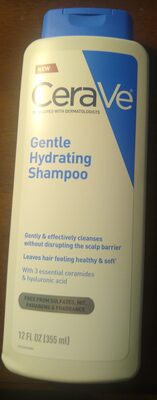
CeraVe
Gentle Hydrating Shampoo
2 to 3 times a weekSulfate free, fragrance free, cheap. The everyday shampoo for a scalp that gets tight or itchy.
approx. $12View details
What causes most dandruff, why ordinary anti-dandruff shampoo disappoints, and the instruction everyone ignores.
Flakes on a dark shirt are the reason most men buy their first anti-dandruff shampoo, use it for two weeks, decide it does not work, and go back to whatever was in the shower.
Usually the shampoo was fine. The way it was used was not.
A yeast called Malassezia lives on nearly everyone's scalp and causes no trouble at all for most people. In some, it gets out of hand, the scalp reacts, and skin cells shed faster than normal. That is what you see on your shoulders.
This matters because it tells you what the right product does: it targets the yeast, rather than washing the flakes away and waiting for them to come back.
Anti-dandruff shampoos that contain an antifungal such as ketoconazole are regulated as medicines in several countries, including the United States. Advertising medicines follows different rules from advertising cosmetics, and those rules vary by country.
So this guide explains what dandruff is and what generally helps, but it does not recommend or link a specific medicated product. A pharmacist can tell you in two minutes what is available where you live and whether it suits you, and that advice is worth more than a link.
Whatever medicated shampoo you end up with, the packaging will tell you to leave it on the scalp for a few minutes. Almost nobody does, because it feels like standing around in the shower for no reason.
An antifungal needs contact time. Applied and rinsed off in twenty seconds, it has little chance to act, and the honest conclusion afterwards is that the product failed. It did not get the chance.
Always follow the directions on the packaging itself. They take priority over anything written here.
Not every flake is dandruff. A dry, tight, itchy scalp with small fine flakes and no oiliness is often simply irritated, frequently by washing daily with a harsh shampoo.
In that case an antifungal is the wrong tool, and a gentle sulfate free shampoo used less often does more. If you are not sure which of the two you have, try the gentle route for three weeks first. It cannot make things worse.
If the scalp is red, sore, weeping or in patches, or if nothing improves after a few weeks of correct use, that is a question for a pharmacist or a doctor.
Buying something stronger from the internet is the wrong next step, and in this category it is also the most common one.
Work out first whether it is dandruff or a dry, irritated scalp. For the second, a gentle shampoo used less often does a lot. For the first, ask a pharmacist rather than a website.
Sulfate free, fragrance free, cheap. The everyday shampoo for a scalp that gets tight or itchy.
The cheapest thing on this site and the one that solves greasy roots without washing more often.